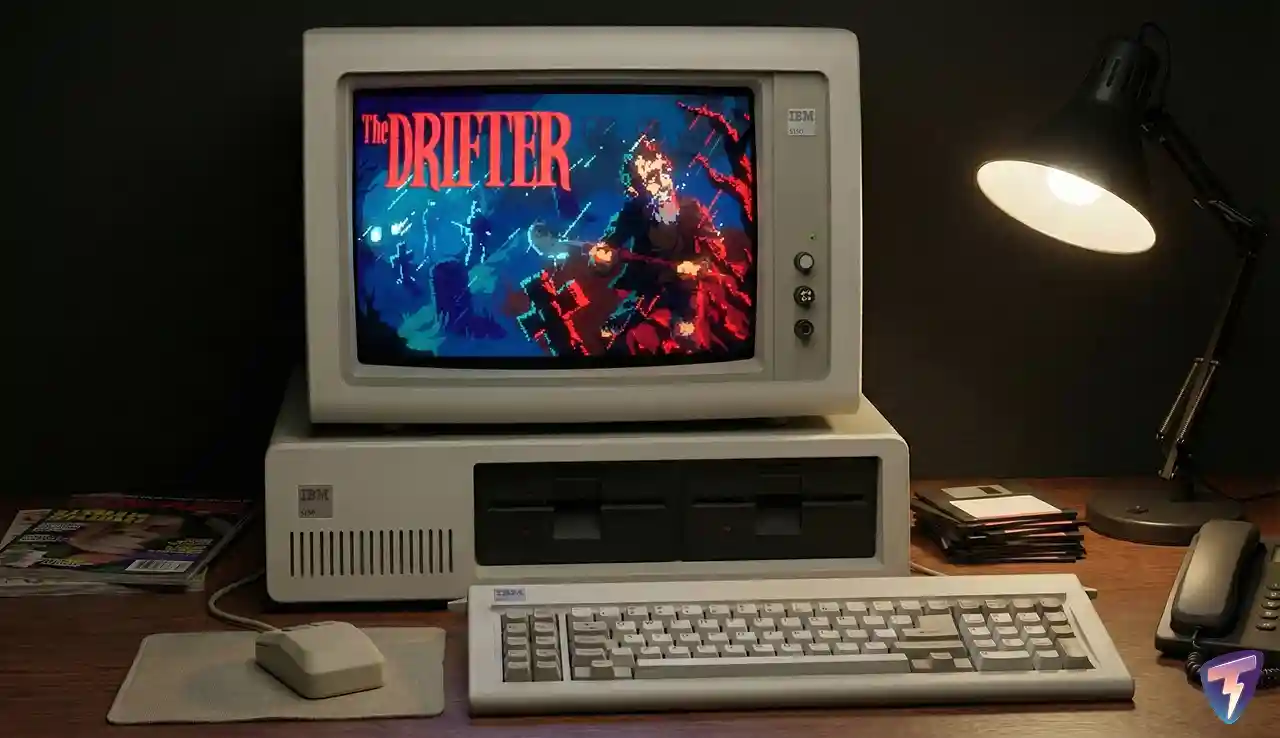

Sometimes, to tell a high-impact story, you don’t need next-gen engines or multimillion-dollar budgets. Just as we sometimes go overboard with JavaScript in web development, we also have too much resolution in video games. The Drifter is proof of that.
This is a point-and-click adventure that isn’t trying to be nice. It’s dirty, it’s dark, and it grabs you from the very first frame because it masters something that’s in short supply these days: atmosphere.
The Weight of the Narrative
I have to admit, this adventure game really took me by surprise. When you’re passionate about a specific genre, you’re obviously predisposed to enjoy it, but let’s be real—there are games, and then there are games. It is genuinely refreshing to see a modern title that makes you breathe in the essence of old-school adventure games from minute one.
The story has touches of humor right from the start, but we aren’t playing Monkey Island here. The moment you clear the first scene, you start feeling like an outsider in a city that seems to hate you from every corner. This is actually a positive; it builds tension and makes you empathize with the character. Now, you might be asking yourself: “But this isn’t an action game, is it?” You’re right, it’s not. However, they’ve added a specific mechanic that I’ll touch on later which perfectly explains this nuance of tension.
What I loved most about The Drifter is the dialogue. It is incredibly well-written and thoughtful—which is key in a game where character interaction drives everything. Another detail I appreciated is that the story itself pushes you forward. Yes, there are puzzles, but you won’t run into that classic “moon logic” where you have to combine a rubber chicken with a pulley to solve a problem. We’ve all been there—trying to force inventory items together in ways that make zero sense. Here, the solutions feel logical.
Without spoiling anything, the plot is solid. It twists at just the right moments, and the characters—both main and secondary—have a life of their own. The fact that the game features full voice acting makes even the minor characters feel just as significant as the major players. This really bumps up the final score for me. Visually, it reminds me of Indiana Jones or Monkey Island, but the voice-acted dialogue gives it a Broken Sword vibe. Although the text is translated into several languages, the audio is English-only. It’s clear, though I missed a few nuances here and there—I believe they use quite a few Australian idioms, which I’m not as tuned into as I am with British or American English.
Aesthetics: Less is More with Pixel Art
Just as we champion the Astro framework for its simplicity in web dev, the art of The Drifter uses pixel art to leave room for the imagination. The aesthetic is dark, and the low resolution helps create a sense of grime and gritty realism that modern, high-fidelity graphics just couldn’t replicate in the same way. The environments feel depressing, which aligns perfectly with the game’s themes. The world feels entirely hostile to the protagonist, amplifying the downward spiral he faces. The situation Mick is living through, and the places we have to wander, offer a glimpse into a harsh reality many people actually experience—you can feel the loneliness and the rejection of an entire city, or perhaps society in general.
On top of that, the cold weather and rain feel amazing rendered in this dark pixel art style. It’s a brilliantly executed atmosphere that fits the title like a glove. They’ve managed to say so much with very few resources. All of this pairs beautifully with the music, which is another highlight I’ll get to in a minute. (By the way, you can find the soundtrack on Bandcamp and buy it to support the project).
The Soundtrack: The Engine of Suspense
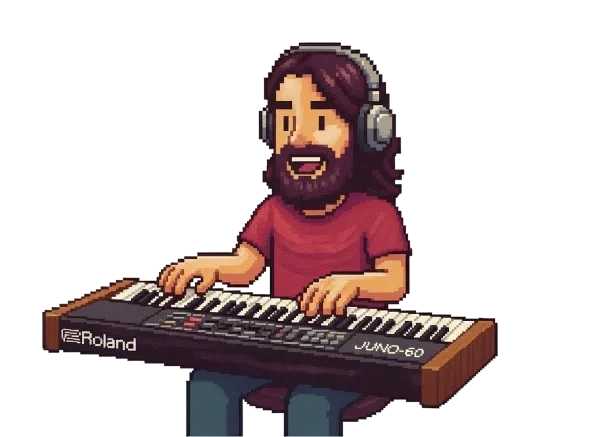
The synths dictate the rhythm of the story, almost acting as the protagonist’s own heartbeat. I really loved it; you can tell a lot of care went into the sound design. It generates exactly the tension the narrative needs—and yes, also during the action sequences, because this game actually has them. There are moments where nothing has happened yet, but the audio alone makes you feel like something is about to snap. Of course, it’s not just the music; the voice acting and the use of silence play a huge role. In certain moments, those silences communicate more than words ever could.
Gameplay: Tradition or Evolution?
This is probably one of the most interesting aspects of the game. I don’t recall seeing something quite like this in the genre before. Yes, it maintains the traditional point-and-click format, but they’ve added action sequences where you can die. In fact, you’re going to die several times. This creates both tension and fun, and it actually ties directly into the story’s lore. It’s a smart move. Leveraging certain narrative quirks to introduce these mechanics deserves high praise. Solving a puzzle while standing still and thinking is one thing; deciding how to escape a situation while a monster or enemy is coming for you is a completely different ball game.
Furthermore, the camera movements feel very modern for a game trying to take us back to the past. This led me to dig a little deeper into the tech stack they used. The game runs on Unity, which gives them the advantage of portability (easy ports to Switch, PC, Mac, etc.) and modern rendering tools. As for the studio—which I haven’t mentioned yet—they are an Australian team called Powerhoof.
What exactly is PowerQuest?
The studio includes programmer Dave Lloyd, the lead dev at Powerhoof. Dave realized that “vanilla” Unity isn’t exactly friendly for making classic point-and-click adventures. So, he built a framework inside Unity called PowerQuest. It essentially creates a layer that turns Unity into a specialized engine for adventure games—similar to the classic Adventure Game Studio (AGS) but with modern tech.
PowerQuest enables a series of improvements that are clearly visible in the game:
- Genre-specific handling of dialogues, inventories, and rooms.
- A simpler scripting system for game logic, so you don’t have to code every basic interaction from scratch in pure C#.
- Integration of pixel art tools and automatic lip-syncing.
The coolest part? They didn’t keep it to themselves. PowerQuest is free, and they’ve released it so anyone can use it to build their own adventure games in Unity. A lot of recent indie games are already using it, and it warms my heart to see this kind of sharing in the dev community.
As a coding enthusiast, when I like a game this much, I can’t help but peek under the hood. You might have clicked on this post for a non-technical review, but I can’t resist combining my passions. As a programmer, I love C#, though I haven’t been able to dive into it as much as I’d like since my day job focuses on Frontend and JavaScript. But I think I’ll be trying my hand at some Unity experiments very soon.
By the way, while we’re on the subject of the team, I have to mention Barney Cumming, who handled the art and game design. In my opinion, his work on The Drifter is spectacular. Every setting drips with the exact atmosphere the game needs. The screens are perfectly readable—collectible items are clearly visible, and the paths you can take are obvious. The design genuinely hooks you, making you want to dig deeper. At the end of the day, a player just wants to have fun and finish the game. In this genre, we’ve all played titles where progress felt like a total roll of the dice. So, crafting an experience where the user enjoys the journey and is motivated to see the end is worthy of high praise.
Conclusion
I love these types of games—if you’ve read this far, that’s probably obvious. While I’m biased toward giving adventure games a good score, The Drifter genuinely goes above and beyond. It took me back to the golden age of the genre but injected enough fresh air and gameplay innovation to prove that not everything has been invented yet.
The game is fun—you will have a good time, guaranteed. If you play on Steam, there are various achievements and collectibles based on your choices. Personally, I don’t care much about that, but there is an achievement for beating the game with a maximum number of deaths. You’ll probably have to replay it to get that one because, as I said: you will die, and you’ll enjoy it. The length varies depending on your skill and reading speed, but I’d say 6 to 8 hours of entertainment is a safe bet. Not bad at all for a graphic adventure.
The experience itself offers funny moments, high tension, interesting dialogue, and even some moral reflection. It’s divided into chapters, which makes it easy to enjoy the story, save after a chapter, and pick it up later. I’m definitely going to keep an eye on this studio. If they keep putting out adventure games of this caliber, they’ve found a new fan.
To wrap things up: the fact that a small studio developed this is yet another example that a few organized people with a common goal can achieve results that earn my total respect. Indie games are fundamental; they are like those thousands of hidden books waiting to be found. Buying a bestseller is easy—the hype and marketing usually make us like them before we even open the cover. But luckily, there are so many unknown authors writing absolute masterpieces…
Score
- Gameplay: 10/10
- Story: 9/10
- Innovation: 9/10
- Soundtrack: 9/10
- Duration: 9/10